
| |
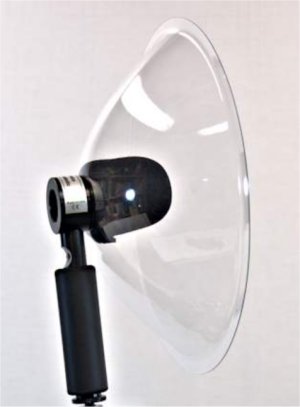
The Wildtronics Pro Mini Parabolic will transform an omnidirectional microphone into a shotgun-like microphone, but with better isolation and reach. Boost your microphone for dramatically improved reach and isolation. Parabolic reflectors provide gain, so you can reach subjects that are outside the range of other microphones, including shotgun microphones.
Fits most omnidirectional microphones less than 26mm in diameter. We recommend using omnidirectional microphones for best results. You can use cardioid microphones, if you use the included seal to cover the vents on the side of the microphone. The kit comes with adapters for 19-26mm pencil style microphones and most lavalier microphones.
Handle base has metal 1/4-20 threads for easy tripod/hotshoe mounting. Accessory bar mount provision. The accessory mount will allow you to mount our Mini-Accessory Bar directly to the handle. The Mini-Accessory Bar can hold a small, hand-held recorder for quick easy use with just one short cable to your microphone.
$260 without microphone
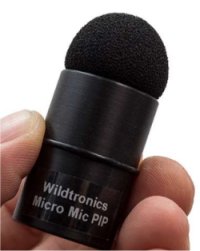
Includes a 6 foot, replaceable cable. One 3.5mm straight connector and the other side is a 90 degree angle 3.5mm connector, both gold plated. The Wildtronics Micro-Mic PIP is a good low noise, high sensitivity, low cost microphone that perfectly fits our All Purpose Parabolic or Pro Mini Parabolic.
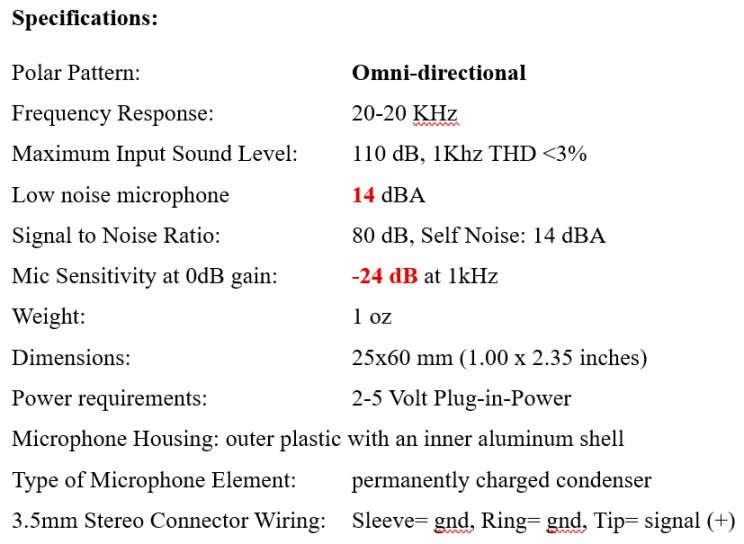
Now with an improved microphone element specifically designed for 3.5mm PIP inputs with 2-5 volt power. The improved element also has higher sensitivity, meaning it has a higher output that will overwhelm the noise typical in low cost 3.5mm recorders. You can also use these great little microphones by themselves, outside of the dish, as a general omnidirectional microphone. You can even use a pair of them for stereo recording set-ups, using a Y cable, that we also have available. The Micro-Mic PIP requires a recorder and or camera, that has a 3.5mm input with 2-5 volt PIP, or Plug-in Power. The Micro-Mic PIP is less than 2 inches long, weighs less than 1oz, has a good 14dBA noise floor, and has a built-in windscreen. This mic fits directly into the central Mic Tube of our All Purpose Parabolic, hub of our Pro Universal Parabolic, or Pro Mini Parabolic. The mic has a machined aluminum construction, is fully shielded, and has a gold plated, Neutrik 3.5mm stereo jack. The left channel is connected to the mic, and the unused right channel is grounded through a 100 ohm resistor. If you want the Micro Mic PIP to record on both the left and right channels, we offer a 3.5mm mono to stereo adapter, listed under the Accessories for our Performance Series Microphones in our webstore. A 6 foot, 3.5mm cable, with gold plated connectors, is included. The reason why we use a detachable cable is that cables will wear and need replacing far more often than a connector and you may want different length cables for different applications. You can replace the cable anytime inexpensively and still have a good microphone.
$75
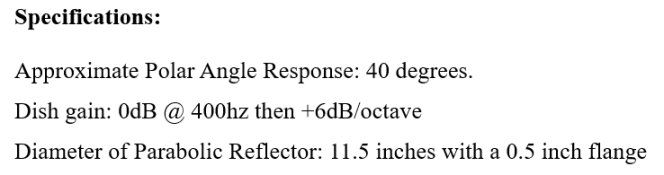
The 11.5 inch dish plus Mini PiP microphone frequency response can be determined from information given on the Wildtronics website and using the Dish Gain equation. On the following chart I plot several curves, 1) in grey I show the PiP microphone response normalized to 0 dB as published by Wildtronics. 2) the blue curve shows the absolute responce where the microphone has -24 dB sensitivity at 1000 Hz. 3) the green curve is the dish gain for a 10.5 inch effective dish working at 80% efficiency. 4) finally I add the blue and green curves together to obtain the heavy red curve of the Dish plus Microphone Frequency Response.
Frequency Response:
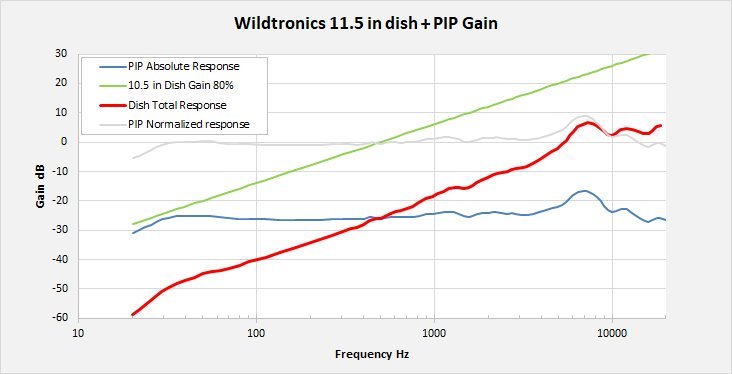
The Frequency Response is far from "flat" with this setup. One must be aware of this effect, the resulting audio will be colored with a heavy boost at higher frequencies. My intended use for this setup is for evening and night recording of A) Owls and B) spring and fall migration. For owls I am primarily interested in the response in the vicinity of 400 to 600 Hz. For migration I can appreciate the boost at the higher frequencies expected of migrating bird calls. Additionally, the small diameter dish means I am getting a much broader “field of view”, (cardioid to super cardioid, NOT hyper cardioid like the 22 inch dish.)
The following chart is a repeat of that above for which I have added a curve in orange showing the power spectrum of a Barred owl calling. The greatest power in the call at 510 Hz lies right in the -26 dB sensitivity range.
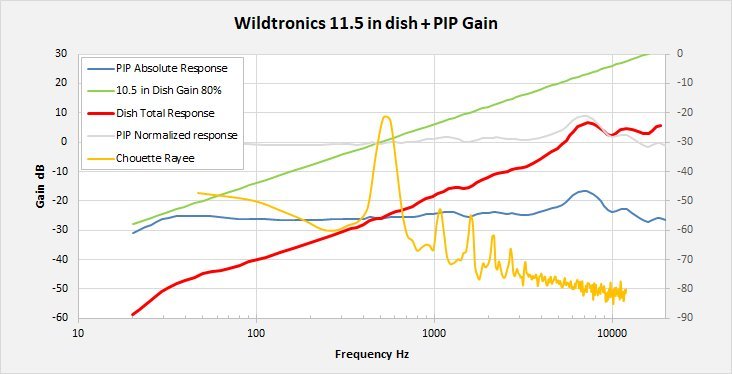
Currently I am starting to experience moisture issues with the Mini PiP. Houston and Gulf (of Mexico) Coast humidity spells trouble for ambient field recording. There is no easy solution and an evening / night owl recording setup remains a work in progress.
KJS 02/2026